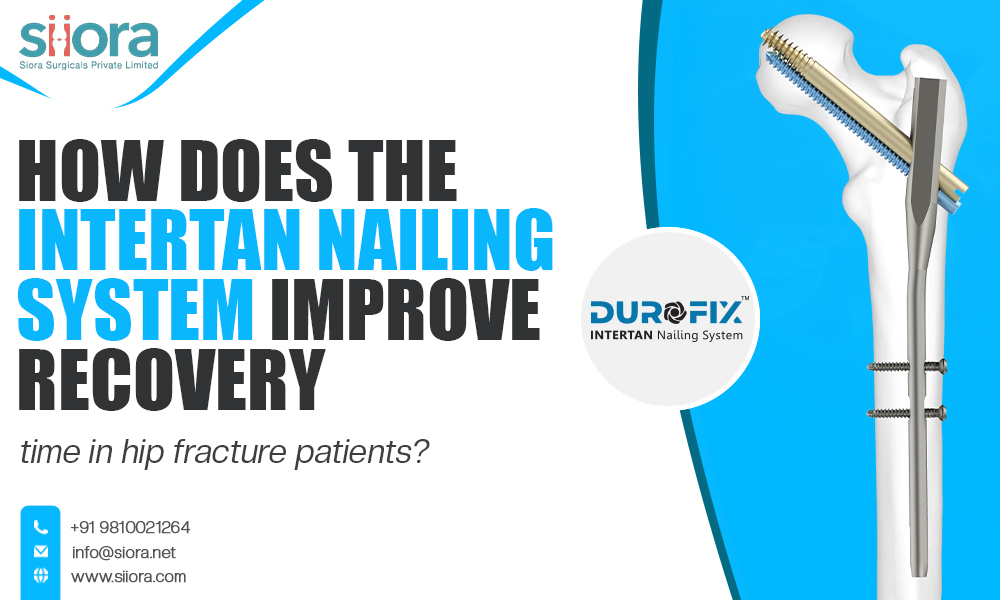
When someone suffers a hip fracture, especially an elderly patient, the first concern is not just fixing the bone but helping them get back on their feet as soon as possible. Long bed rest after a hip injury can lead to complications such as muscle weakness, chest infections, or blood clots. That is why the choice of fixation method plays such an important role in recovery. The Intertan Nailing System has become a preferred option for many surgeons because of how it supports stable fixation and early mobilization.
A Design Focused on Stability
One of the main reasons recovery improves with the Intertan system is its unique nail and screw design. Unlike traditional single-screw systems, this implant uses an integrated dual screw mechanism. These two screws work together to control rotation and compression at the fracture site. In simple terms, the femoral head is held more securely, which reduces unwanted movement after surgery.
When a fracture is stable, patients experience less pain during early movement. This makes it easier to begin physiotherapy sooner, which directly affects how quickly they regain strength and confidence.
Controlled Compression at the Fracture Site
Bone healing requires contact between fracture fragments. The Intertan system allows controlled compression across the fracture during and after surgery. Because the screws are mechanically linked, surgeons can achieve better fracture reduction and maintain it.
This controlled compression helps the bone heal in proper alignment. When healing progresses smoothly without collapse or shortening, patients can bear weight earlier. Early weight-bearing is one of the key factors that shortens overall recovery time in hip fracture cases.
Reduced Risk of Complications
Hip fractures, particularly intertrochanteric fractures, are prone to complications like screw cut-out or implant failure. When fixation fails, patients often require revision surgery, which delays recovery and increases health risks.
The Intertan nail provides strong rotational stability and better resistance to varus collapse. In everyday practice, this added stability means fewer mechanical failures. When complications are minimized, rehabilitation can continue without interruption, and patients avoid the stress of additional procedures.
Encouraging Early Mobilization
In hip fracture management, time matters. The earlier a patient stands and starts walking with assistance, the better the outcome. Prolonged immobility leads to muscle wasting and reduced independence.
Because the Intertan system provides firm internal support, many surgeons feel confident allowing early mobilization protocols. Patients can begin sitting, standing, and partial weight-bearing soon after surgery, depending on their overall condition. This early activity improves circulation, reduces hospital stay, and supports faster return to daily routines.
Better Alignment, Better Function
Another important factor in recovery is restoring the natural alignment of the hip. Poor alignment can lead to limping, persistent pain, or long-term functional limitations. The Intertan design helps maintain the neck-shaft angle and prevents excessive shortening of the femur.
When alignment is preserved, gait recovery becomes smoother, patients regain confidence in walking, and long-term functional outcomes improve. Small mechanical advantages during surgery often translate into meaningful differences during rehabilitation.
Patient Comfort and Confidence
Recovery is not only physical; it is also psychological. Patients who feel stable and secure during movement are more likely to participate actively in physiotherapy. Stable fixation reduces pain caused by micro-movement at the fracture site. Less pain means better cooperation with rehabilitation exercises.
Family members and caregivers also feel more reassured when progress is visible early on. Shorter hospital stays and smoother recovery reduce emotional and financial stress.
Final Thoughts
Hip fracture treatment is not just about placing an orthopaedic implant. It is about restoring mobility, independence, and quality of life. The Intertan Nailing System improves recovery time by offering strong rotational stability, controlled compression, and reliable fracture alignment. These features support early mobilization, reduce complications, and promote steady healing.
While no implant alone guarantees rapid recovery, choosing a system that supports both mechanical stability and biological healing makes a real difference. In many cases, that difference can be seen in how quickly a patient moves from the hospital bed back to daily life.
 Siora Surgicals Pvt. Ltd.