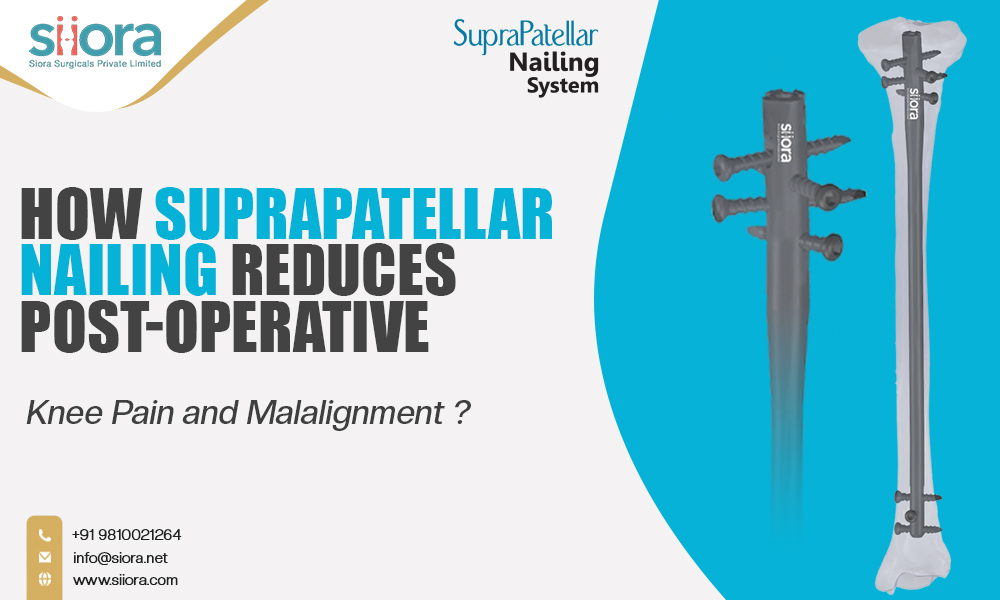
Breaking your shin bone (the tibia) is bad enough. The surgery to fix it is a big deal, but what many people don’t expect is the recovery. For years, a huge number of patients who had a rod placed in their tibia ended up with nagging, chronic pain in the front of their knee. On top of that, there was always a risk that the bone wouldn’t heal perfectly straight. It was a frustrating “known complication” of a necessary surgery. But what if a simple change in technique could tackle both of these problems at once? That’s exactly what suprapatellar nailing does, and it’s a total game-changer.
Attacking the #1 Complaint: That Nagging Knee Pain
Let’s talk about that post-op knee pain. It’s the most common complaint after a traditional tibial nailing, and it’s not hard to see why. The old-school way to insert the nail involved making an incision just below the kneecap, right through the patellar tendon. To get the right angle for the rod, the surgeon had to bend your knee way up, putting that tendon under a ton of stress. It was stretched, retracted, and sometimes even partially cut just to get it out of the way. It was unavoidable trauma. So, even after the bone healed beautifully, the tendon was angry, scarred, and painful. Patients would complain for months, or even years, that it hurt to kneel, squat, or even just walk upstairs.
The Suprapatellar Detour: Hands Off the Tendon
The suprapatellar approach is a brilliantly simple solution to this problem. Instead of going through the trouble, it goes around it. The surgeon makes the entry point above the kneecap (“supra-patellar”). Using a special protective sleeve, they create a safe tunnel behind the kneecap, completely avoiding the patellar tendon. The tendon is left undisturbed. No stretching, no bruising, no cutting. By taking this smarter path, the primary cause of that nagging anterior knee pain is taken right out of the equation. It’s a textbook example of how respecting the body’s anatomy leads to a better patient experience.
The Fight for a Straight Fix: Beating Malalignment
The second big win is all about accuracy. When a bone heals crooked, it’s called a malunion or malalignment. It can throw off your whole kinetic chain, causing a limp and leading to future problems in your ankle, hip, or back. A surgeon’s number one goal is to line the bone up perfectly straight. But with the traditional method, this was surprisingly tricky. With the knee bent up like a pretzel on the operating table, it was incredibly difficult for the surgeon to get a clear, straight X-ray view of the entire bone. They were trying to assess alignment on a bent leg, which is like trying to tell if a picture is straight while looking at it from a weird angle.
A Straighter Leg Means a Straighter Bone
This is where the other huge advantage of suprapatellar nailing comes in. Because the entry point is from above, the surgeon can keep your leg nearly straight throughout the entire procedure. This gives them a perfect, unobstructed view on the X-ray machine. They can see the alignment from hip to knee to ankle, all in one clean shot. There’s no guesswork. They can make tiny, precise adjustments to get the bone fragments lined up perfectly before they lock the nail in place. A better view always leads to a more accurate result. By making it easier for the surgeon to do their job, the risk of a malunion drops significantly.
The Bottom Line: A Two-for-One Victory
Suprapatellar nailing isn’t just a minor tweak; it’s a major improvement. It tackles the two biggest headaches of traditional tibial nailing head-on. By avoiding the patellar tendon, it dramatically reduces the leading cause of post-operative pain. And by allowing the leg to stay straight, it gives the surgeon the clear view they need to ensure your bone heals straight. It’s a classic two-for-one deal: a happier knee for the patient and a more accurate fix from the surgeon.
Siora Surgicals Pvt. Ltd. is a leading manufacturer and supplier of an international standard range of trauma implants, including suprapatellar nails. The company is preparing to exhibit its advanced orthopedic solutions at the Arab Health Expo 2026.
 Siora Surgicals Pvt. Ltd.