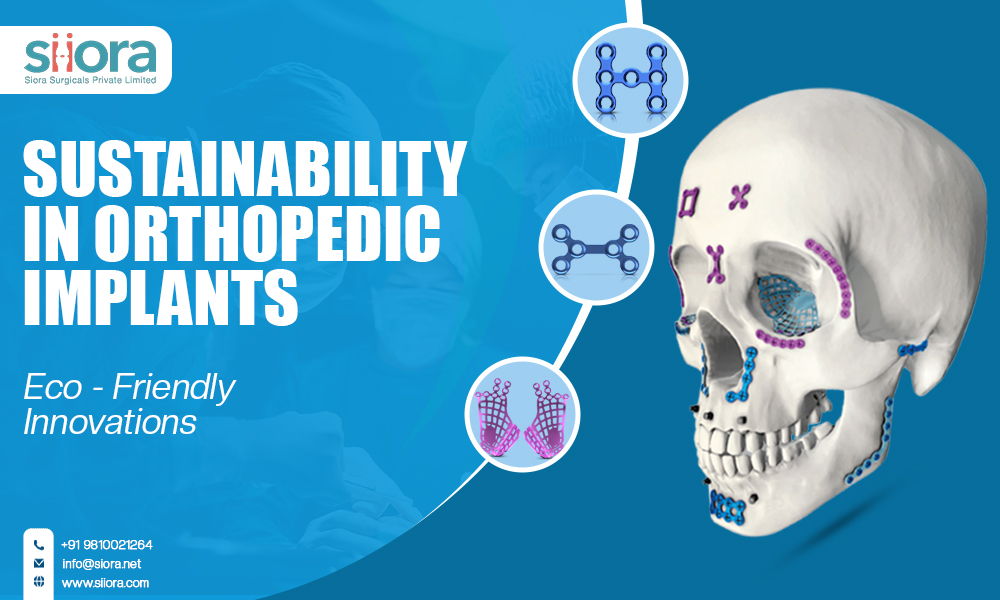
Let’s be honest. When you think about “going green,” the operating room probably isn’t the first place that pops into your head. We’re all thinking about cars, plastic bags, and power grids. But what about the stuff surgeons put inside our bodies? That titanium knee or steel plate has a story, and it’s not always a green one. For the longest time, the only goal was making something strong that the body wouldn’t reject. But now, some people are asking a tough question: can we fix a person without harming the planet?
The Not-So-Clean Secret Behind Implants
Making a modern orthopedic implant is a surprisingly messy business. It all starts with digging metal out of the ground. Then, that metal is shipped, melted, and hammered into shape in a factory that uses a ton of energy. Think about it like a sculptor with a block of stone—a whole lot of the original material gets carved away and tossed out as waste. It’s a brutal, energy-hungry process. Add in global shipping and chemical sterilization, and the environmental cost starts to add up. For decades, that was just the price of admission for modern medicine. But the script is finally flipping.
A New Chapter: Smarter, Cleaner, Better
A quiet revolution is happening in the world of orthopedics. Engineers are getting seriously creative and finding ways to clean up their act from start to finish.
Implants That Just… Vanish?
This is the really cool part. Imagine you break your wrist. The surgeon puts in a plate to hold the bone steady while it heals. But instead of needing a second surgery to take it out, the plate just dissolves. Safely. Into your body. It sounds like sci-fi, but it’s real. Implants made from things like magnesium alloys and synthetic polymers like PLA (polylactic acid) are designed to do their job and then simply fade away. No repeat surgery for the patient, and no medical waste for the landfill. It’s a genius solution.
Building Bones with Printers
The wastefulness of carving implants from a solid block of metal is getting a major rethink, thanks to 3D printing. Instead of cutting material away, additive manufacturing builds the implant from nothing, one super-thin layer at a time. It’s incredibly precise and cuts material waste down to almost zero. It also lets engineers design complex, web-like structures inside the implant, which can help your own bone grow into it faster and stronger. Less waste, better results. What’s not to love?
A Fresh Take on Sterilization
Even the final step—making sure everything is sterile—is getting a green update. The old-school methods often used some nasty gases that are bad for the atmosphere. Now, cleaner alternatives like vaporized hydrogen peroxide are taking over, getting the job done just as well without the environmental baggage.
The Road Ahead
Look, this whole sustainable orthopedics thing is just getting started. It’s a complicated puzzle, trying to find the perfect balance between what’s best for a patient’s body and what’s best for the earth. But the change in thinking is real. It’s a move toward being more mindful. The future isn’t just about building stronger orthopedic implants; it’s about building smarter ones.
Learn about the innovations in the healthcare industry, including orthopedic implants & instruments and other sectors, at the “Future of Healthcare Innovation”, WHX Dubai 2026. Book your place now!
 Siora Surgicals Pvt. Ltd.